
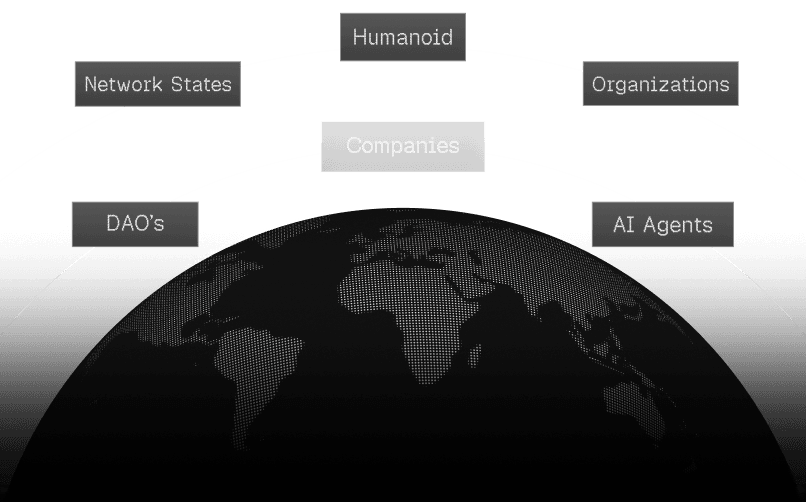
Entities power the world — but they still run on PDFs and trust.
Entities define how people organize, own, and govern. They exist everywhere — but they aren’t computable.
Non-Computable Entities
Entities power the economy, but their rules live in documents and legal language. Software can’t read, verify, or execute how an entity is meant to behave
Trust-Based Enforcement
Entity rules are legally binding, yet enforced manually through people and institutions. This makes governance slow, fragile, and dependent on trust instead of code.
Fragmented Identity
The same entity appears differently across registries, banks, and blockchains. There’s no universal way to verify who an entity is, who owns it, or how it’s governed.
Frontier Mismatch
New entities like DAOs, AI agents, and autonomous systems don’t fit legacy frameworks. They need coordination and accountability, but existing registries weren’t built for them.
01
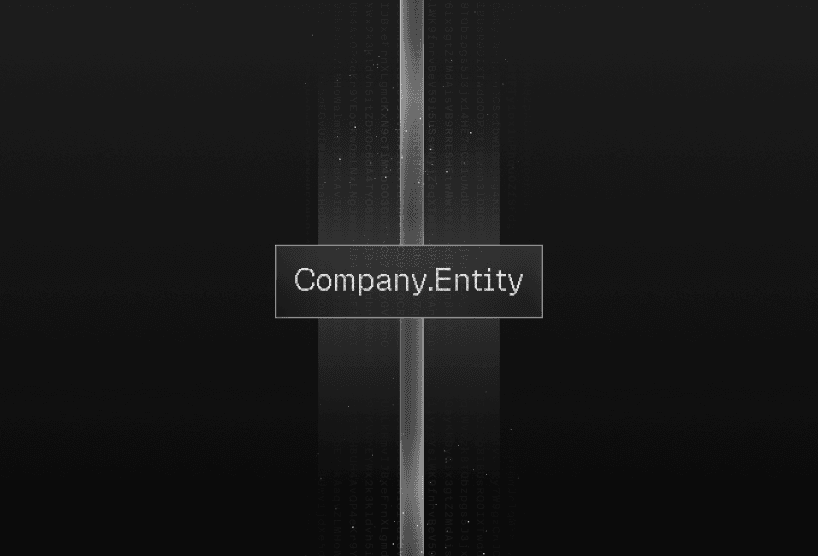
Universal Entity.ID
A single, global identifier for every entity.
Verifies who an entity is, who owns it, and how it’s governed — across jurisdictions and blockchains.
02
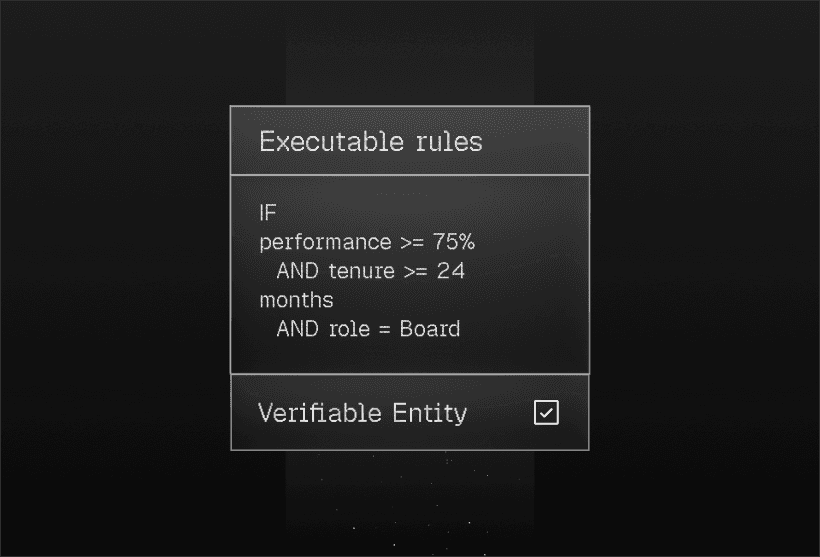
Computable Governance
Entity rules are encoded as executable logic. Approvals, vesting, spending limits, and control structures enforce themselves by default.
03
State-Compliant Registry
Entities can be blockchain-native without breaking the law.
RegistryChain supports real jurisdictions while remaining borderless and interoperable.
04
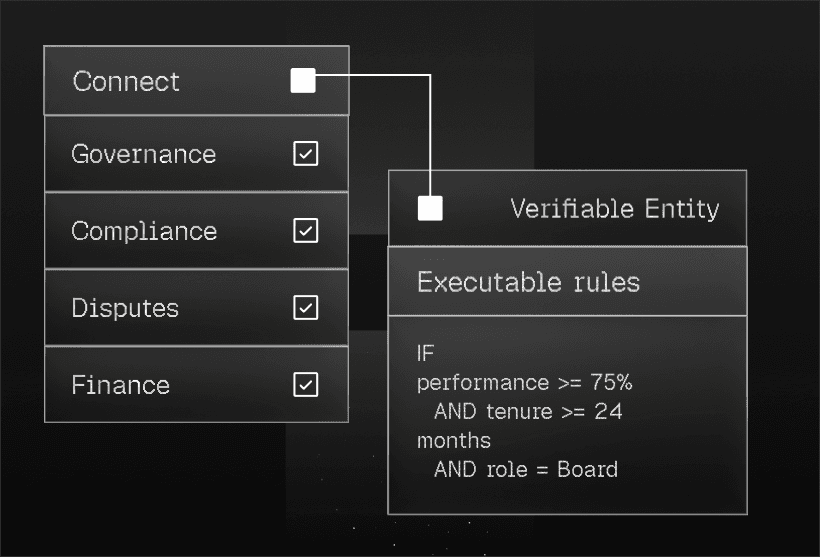
Modular Entity Architecture
Attach governance, compliance, dispute resolution, or financial modules as needed.
Entities evolve over time without re-forming or re-registering.
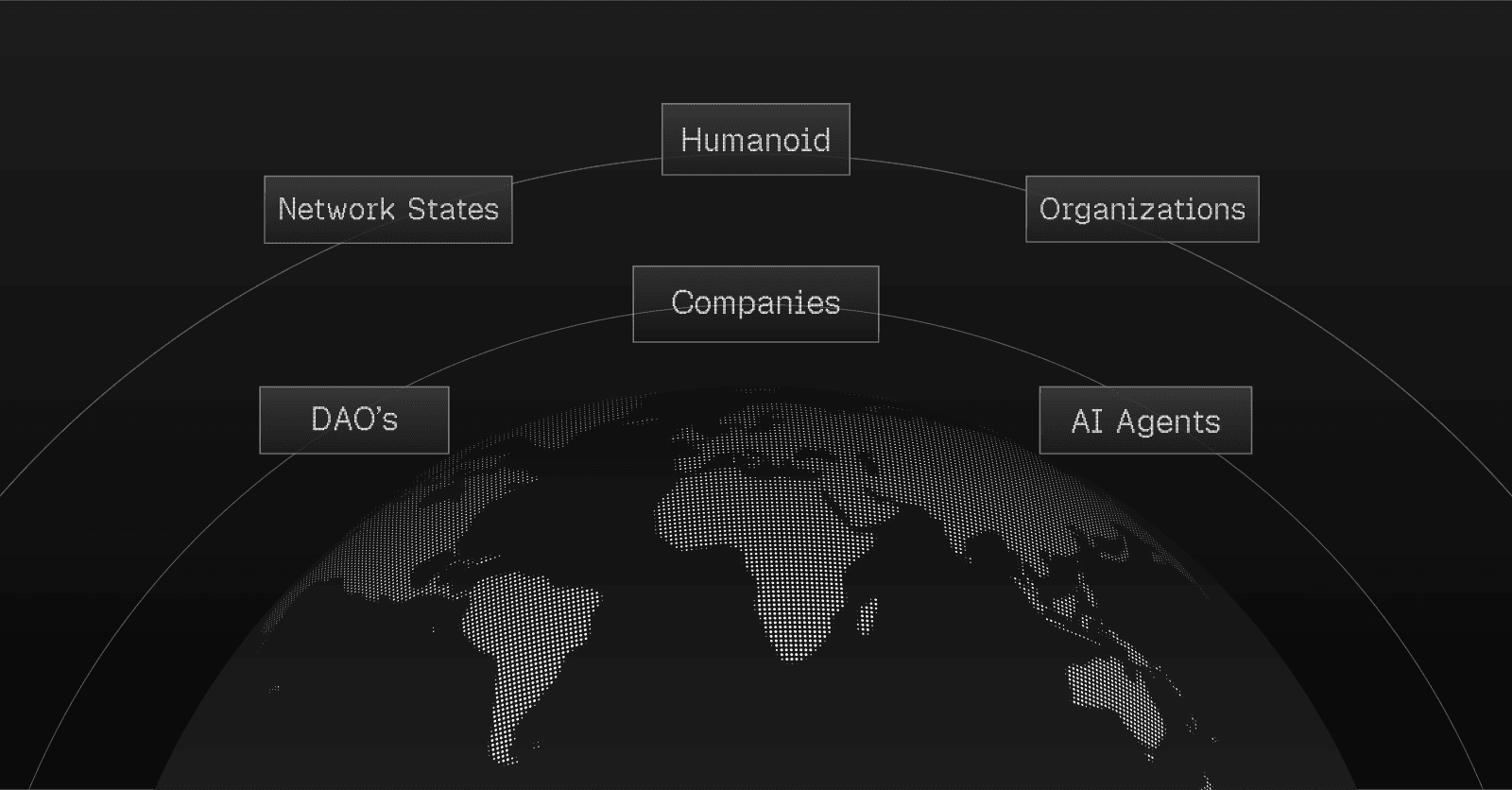
RegistryChain standardizes how entities are identified and governed.
One identity, one source of truth — enforced by code, recognized by institutions.
Registry Chain in Numbers
02
359 Million+
Legal Entities
03
70 Million+
Autonomous Entities
04
70 Million+
Autonomous Entities




Features & Infrastructure for Every
Form of Organization
01
Founders & Companies
Form and govern entities with programmable rules. Automate ownership, approvals, and compliance from day one.
02
DAOs & Web3 Organizations
Operate as blockchain-native entities with real-world legibility. Move beyond pseudonymity without sacrificing autonomy.
03
Banks & Financial Institutions
Access a single, verifiable source of entity identity and governance. Simplify KYC, AML, onboarding, and ongoing monitoring.
04
Regulators & Registrars
Standardize how entities are identified, updated, and verified. Track lifecycle events and governance changes in real time.
05
Developers & Builders
Build governance, compliance, finance, or identity modules on top of entities. Compose applications using entity primitives.
06
Frontier & Emerging Entities
Support AI agents, autonomous systems, and new organizational forms. Enable coordination, accountability, and recognition beyond legacy frameworks.
07
Developers & Builders
Build governance, compliance, finance, or identity modules on top of entities. Compose applications using entity primitives.
08
Frontier & Emerging Entities
Support AI agents, autonomous systems, and new organizational forms. Enable coordination, accountability, and recognition beyond legacy frameworks.
We’re building the infrastructure every entity will run on.
RegistryChain standardizes entity identity and governance so coordination can scale globally, securely, and autonomously.